
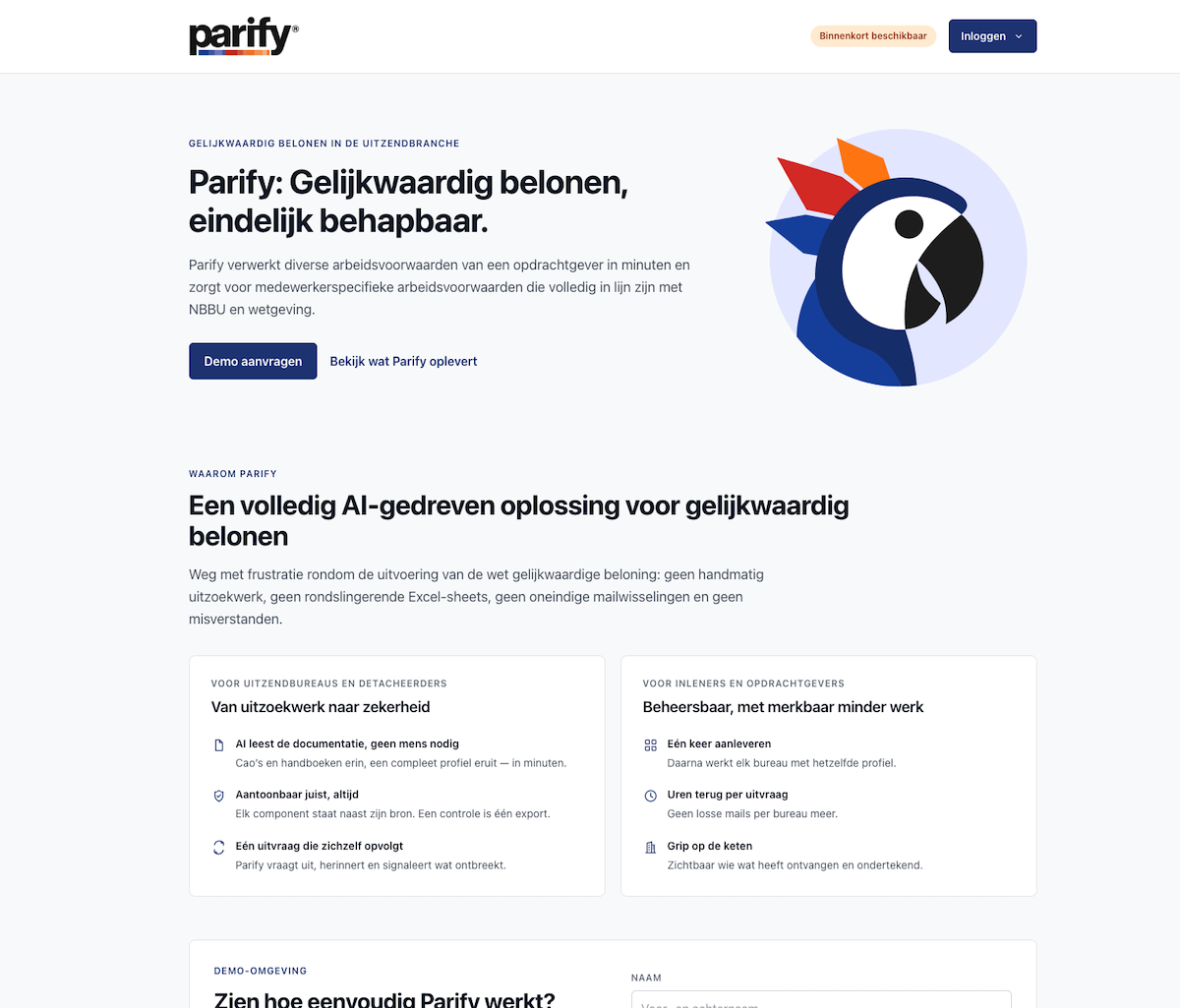

In the flex industry, correctly determining terms of employment is one of the most difficult and error-prone processes there is. Since 2026, temporary agency workers and seconded staff have a statutory right to equivalent remuneration as a comparable employee of the client. That obligation is anchored in the client remuneration rule (WAADI, article 8), the European Temporary Agency Work Directive (2008/104/EC) and the Temporary Agency Work collective agreement (Uitzend-cao) of ABU and NBBU, which as of 2026 takes the step from equal pay on separate wage components to an equivalent total package of terms of employment.
Each client also has different collective agreements (CAOs), pay structures and arrangements, which have to be requested, interpreted and translated into concrete wage components again each time. This was largely done manually: labour-intensive, difficult to hand over, prone to errors and with a rising compliance risk.
TecqGroep wanted not just to digitise that process, but to turn it into a product of its own. The brief that landed on our table:
- Record terms-of-employment profiles (AVPs) in a structured and reusable way
- Be able to read CAOs, SUGB forms and company documents — even without active cooperation from the client
- Reliably translate terms of employment into wage components for payroll processing
- Keep all documents, agreements and changes per client in one place
- Give different roles — from account manager to management — their own overview and rights
- Set it all up as a scalable, multi-tenant platform that can keep growing